Resonate
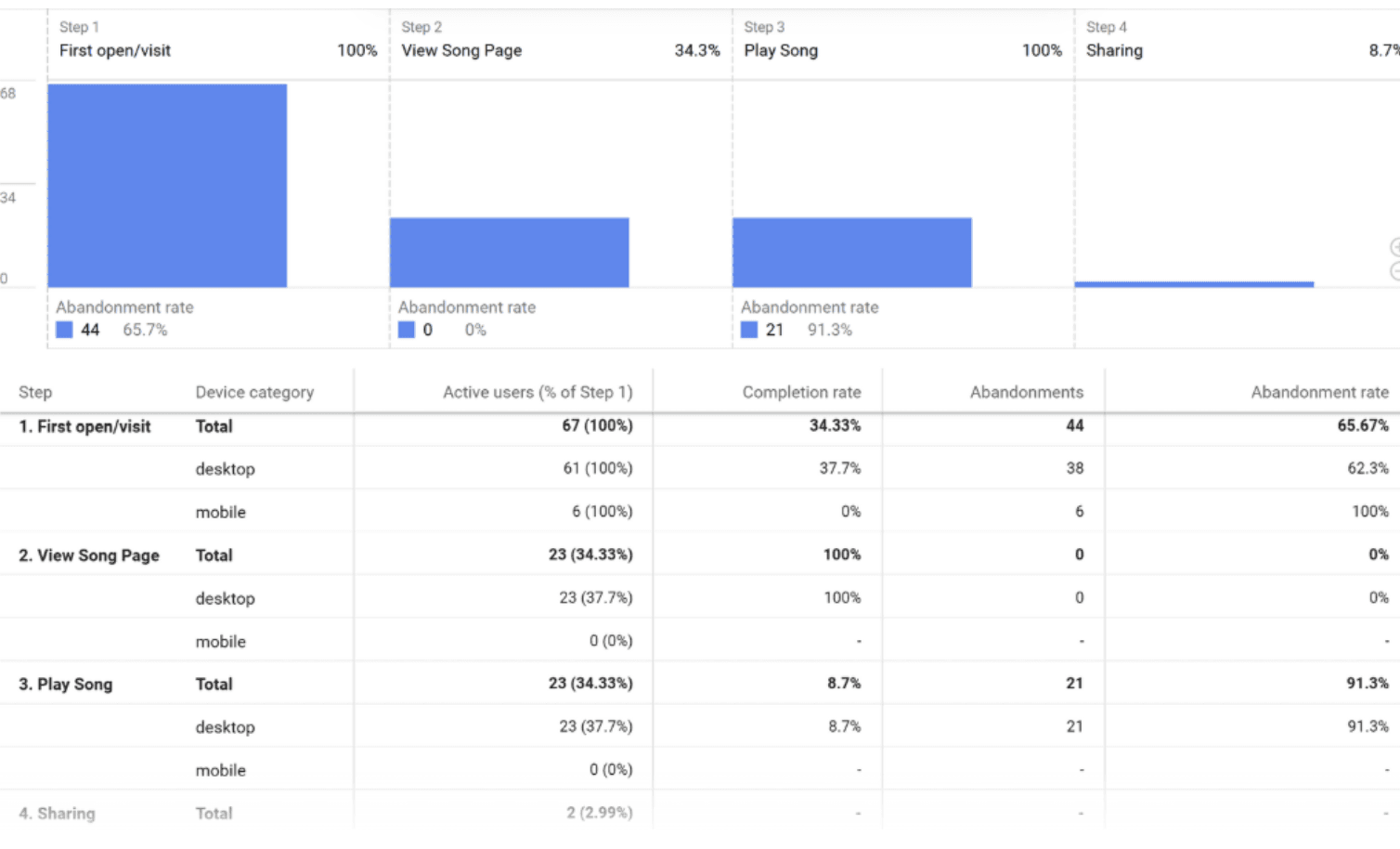
A mixed-methods field study on a social music platform that pinpointed where users were leaving (67.2% abandoning at first visit) and proved the cause was a broken front door, not a broken idea.
A loved idea that users kept leaving
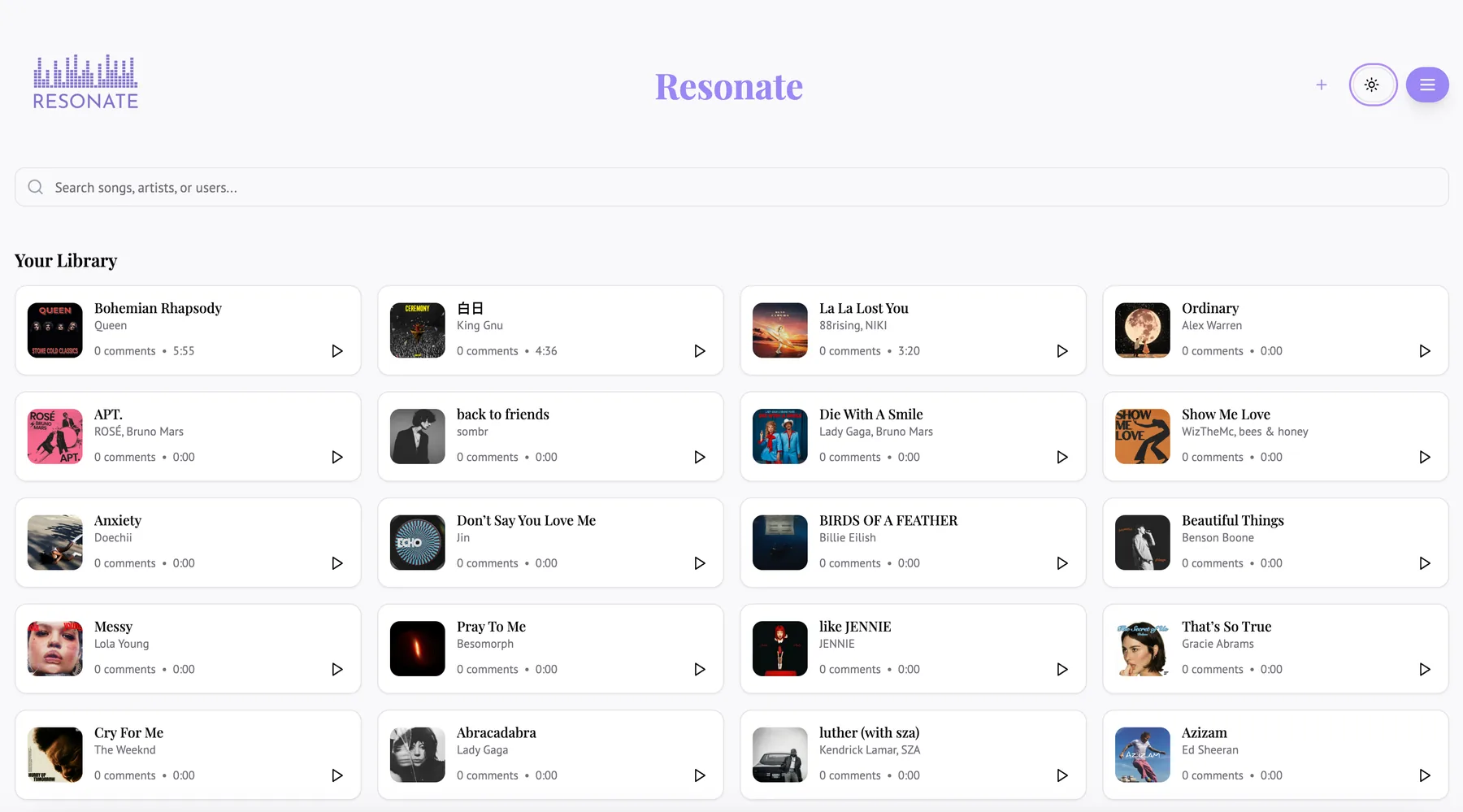
Resonate lets listeners drop timestamped comments on exact moments in a song, turning private listening into shared, annotatable musical meaning. The concept landed. The funnel didn't. Public-sharing bursts pulled in waves of new users who then cratered within a day.
The open question was never whether people wanted Resonate. It was where they were leaving, and why.
Separate “won’t” from “can’t”
The diagnosis hinged on one fork: was this a value problem (people don’t want it) or an access problem (people can’t get in)? Those point to opposite roadmaps: one says redesign the product, the other says redesign the door.
So I instrumented Resonate with Firebase and Google Analytics to see exactly where users dropped in the funnel, then paired that behavioral signal with think-aloud sessions and a content analysis of what users did once inside. Quant locates the leak. Qual explains it.
Triangulating the leak
I owned the quantitative pipeline end to end: event instrumentation (post_comment, filter_click, share), daily-active-user and retention tracking, and the conversion funnels from landing → view → play → share.
The qualitative evidence was blunt. A 60-year-old tester spent her entire session trapped in Spotify’s developer portal, never realizing she had to return to Resonate: “For developers? I’m not a developer. What are you talking about?” Users spent anywhere from 3 to 18 minutes on a single auth step built for the wrong audience.
The churn was the door, not the room
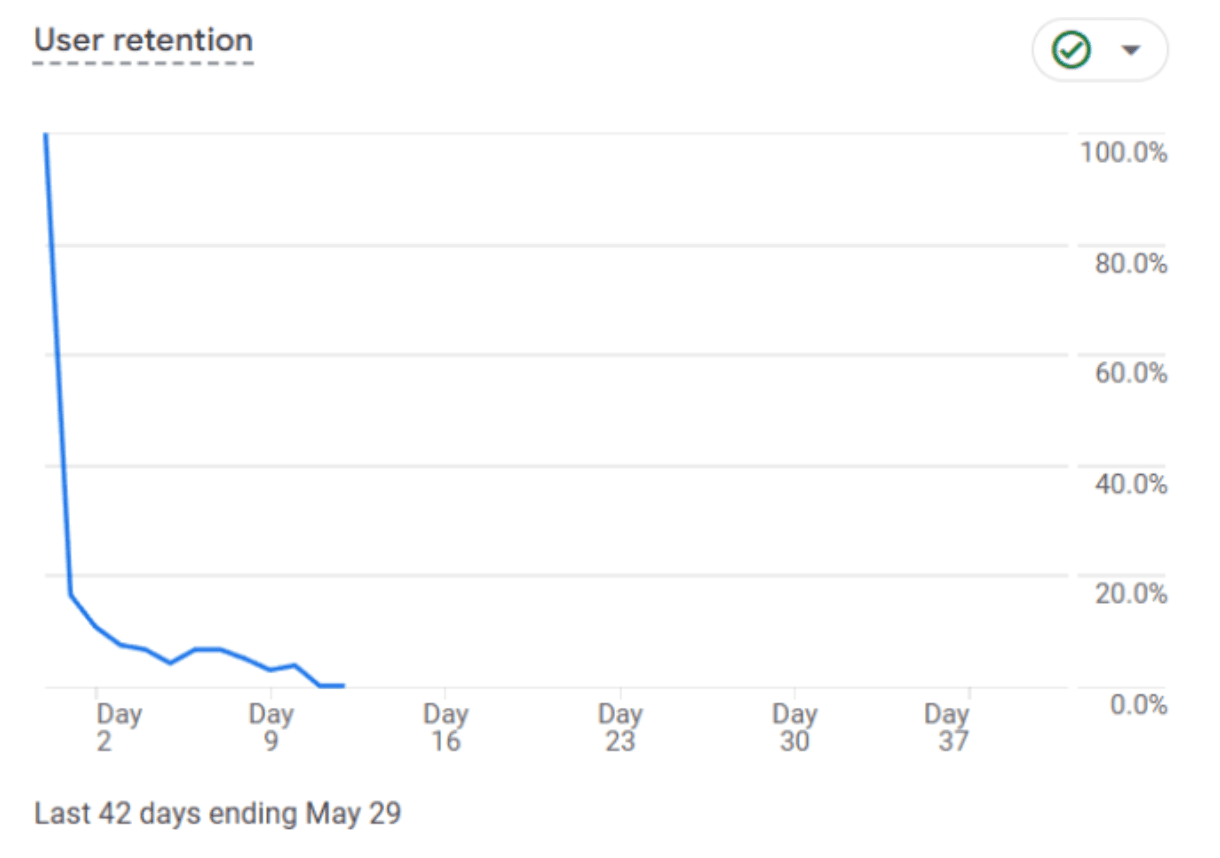
The study reframed an existential-looking retention chart into a scoped, fixable onboarding problem, and protected a validated core idea from being “fixed” in the wrong place.
I was the data-analysis lead: I instrumented Resonate with Firebase and Google Analytics and built the funnel, retention, and event analysis that isolated the 67.2% first-open drop-off. I also worked as a UX researcher across the mixed-methods lifecycle (generative research, usability testing, and this 12-day field study), co-researching with Yoyo Xinman (co-researcher and PM) and Na Young Son (co-researcher).
The call I’m proudest of was methodological: pairing the behavioral funnel with think-aloud to separate “won’t” from “can’t.” That triangulation is what turned a frightening retention curve into a single onboarding bug.
The most useful thing I did was resist the obvious story. A curve that falls from 100% to under 20% in 48 hours looks like “nobody wants this.” The funnel and the think-aloud said the opposite: the people who got in loved it (100% view-to-play, 35 of 36 comments public, “love the concept, love the design”). They just couldn’t clear a developer-portal auth wall built for engineers. Separating a value problem from an access problem changes everything downstream: you don’t redesign the product, you redesign the door.