Nudge Pet
A closed-loop biofeedback companion that reads your stress from a wearable sensor and answers through a virtual emotional support animal, built in 2.5 days and named a Top 10 finalist at MIT Reality Hack 2025.
Not everyone can have an emotional support animal
Emotional support animals deliver real, measurable stress relief, but ownership is gated by resources, living situation, and physical ability. The people who might benefit most are often the least able to keep an animal.
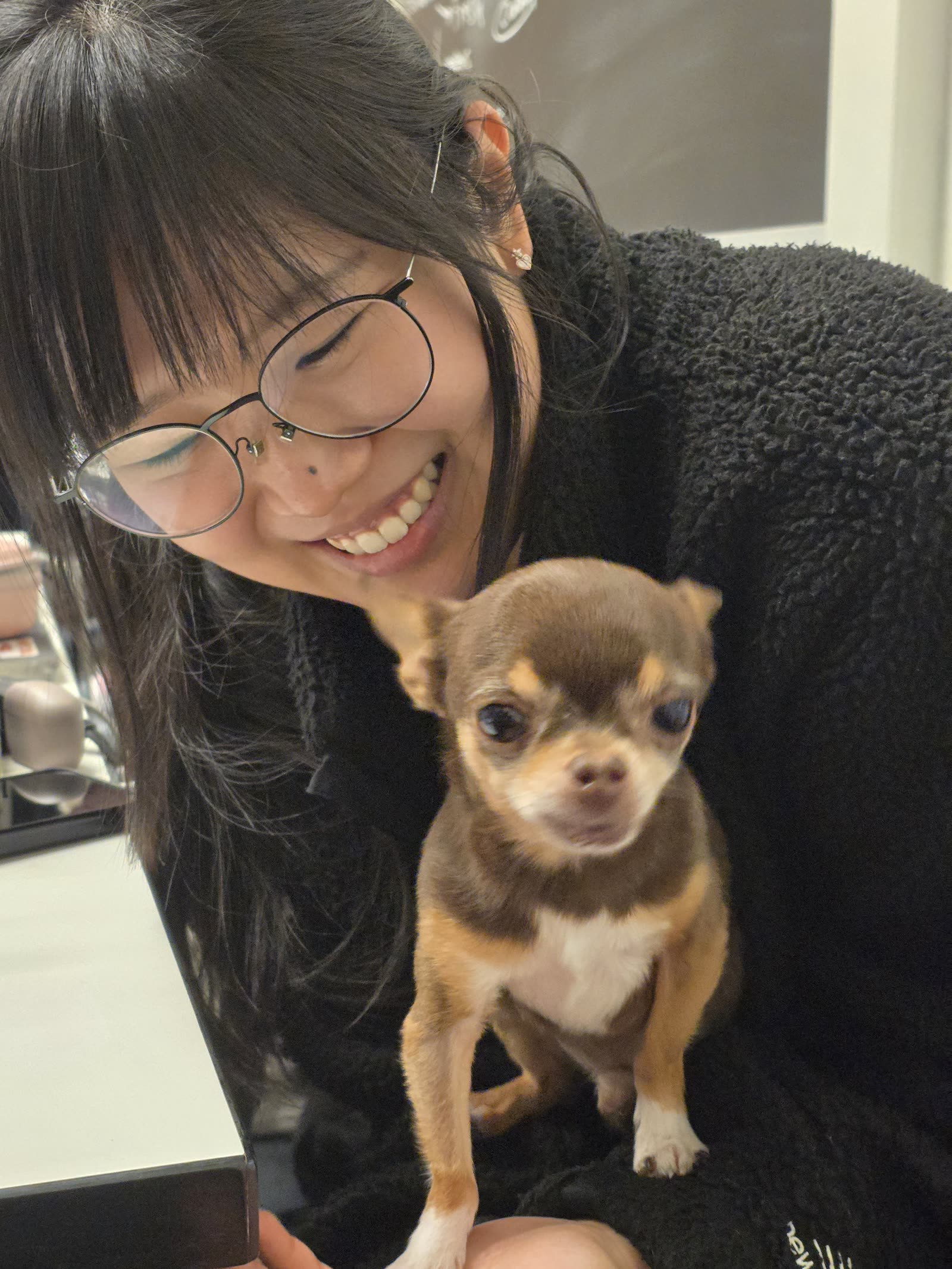
This one started personal. Nudge Pet is modeled on Snuffles, my own emotional support animal, and the question we kept circling was simple: what if caring for yourself felt as easy and joyful as caring for a pet?
Our research question: could a virtual companion deliver some of that judgment-free comfort, and could we make it respond to a person's actual physiology in real time, not a button press?
A closed loop between body and pet
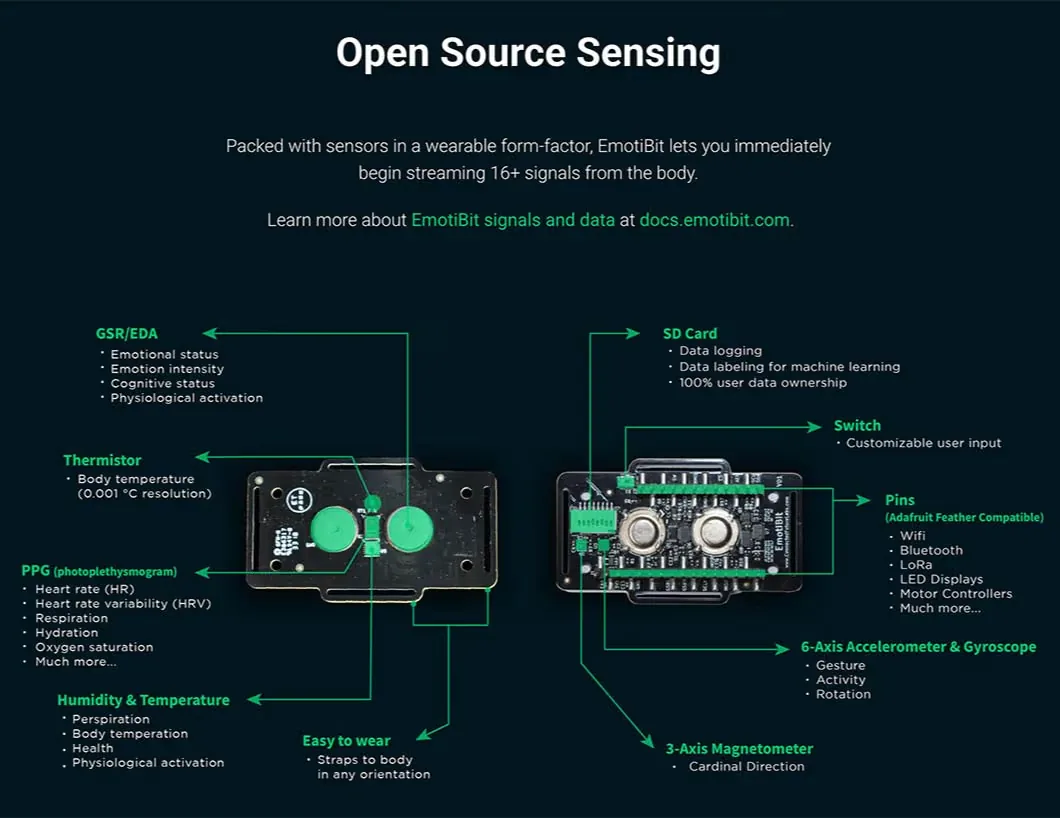
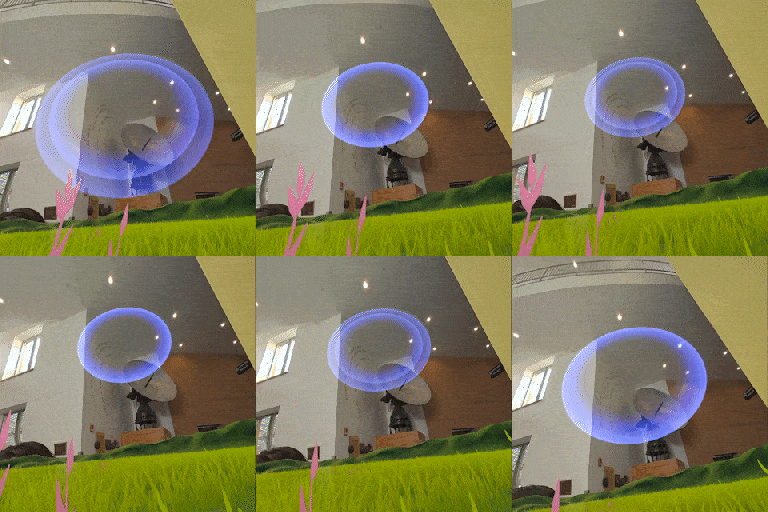
Nudge Pet is a biofeedback loop you can feel. An EmotiBit wearable streams electrodermal activity (EDA), heart rate via photoplethysmography (PPG), and skin temperature into Unity, where those signals become a live estimate of the user's stress. The virtual pet, a passthrough-MR companion on Meta Quest 3, responds to that estimate: calm when you're calm, and when stress spikes, it gently pulls you into a guided meditation.
Two design choices did the heavy lifting:
Why a pet. The research on human–animal interaction is consistent: animals are perceived as non-judgmental, which lowers the barrier to confiding and self-soothing. A pet is an emotional interface people already know how to use. No instructions required.
Why mixed reality. Passthrough MR keeps the user grounded in their real room rather than sealing them into a headset. For a wellness tool meant to reduce anxiety, presence beats immersion. The pet shares your space instead of replacing it.
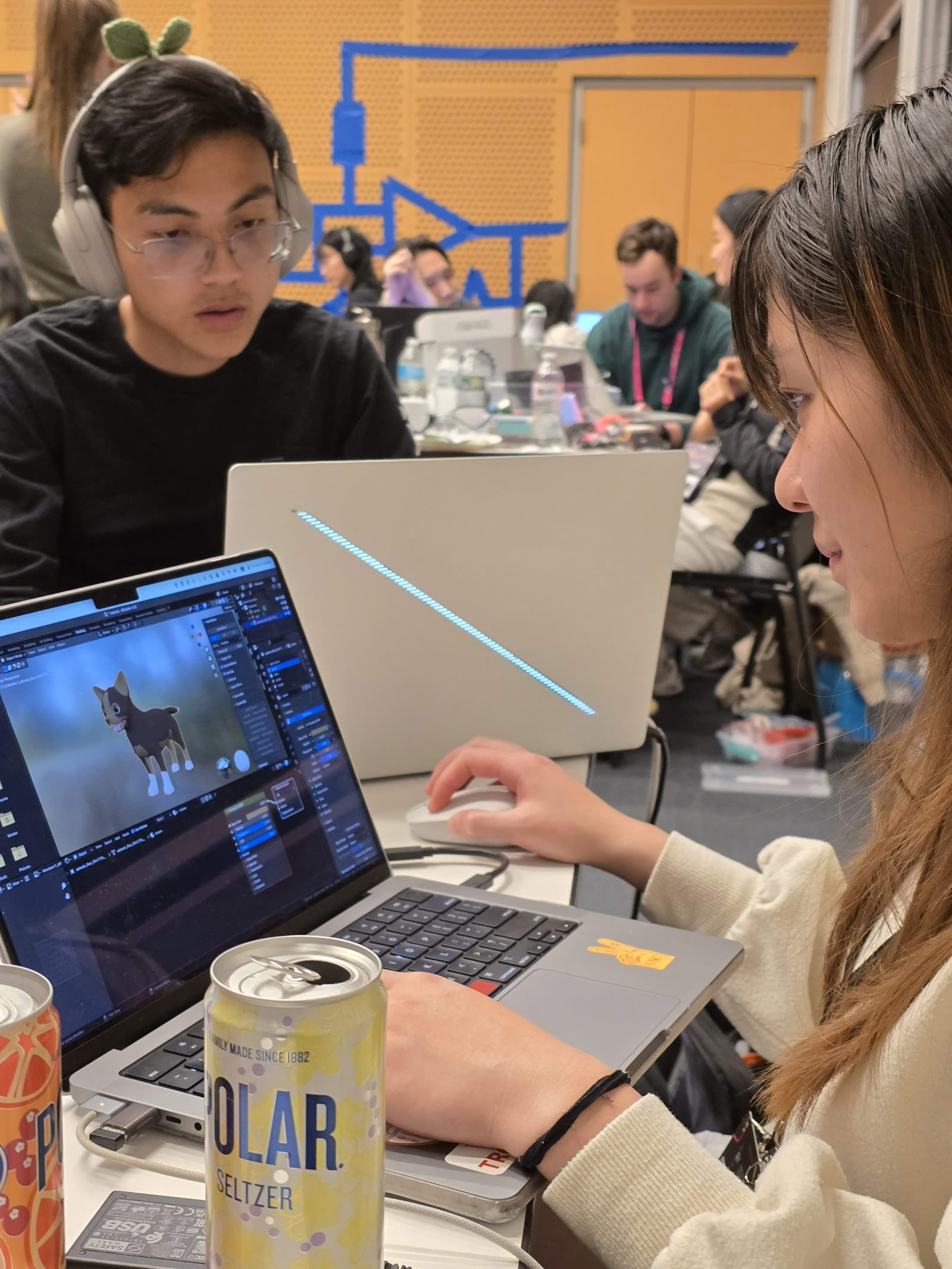
From divergent ideation to a working loop in 2.5 days
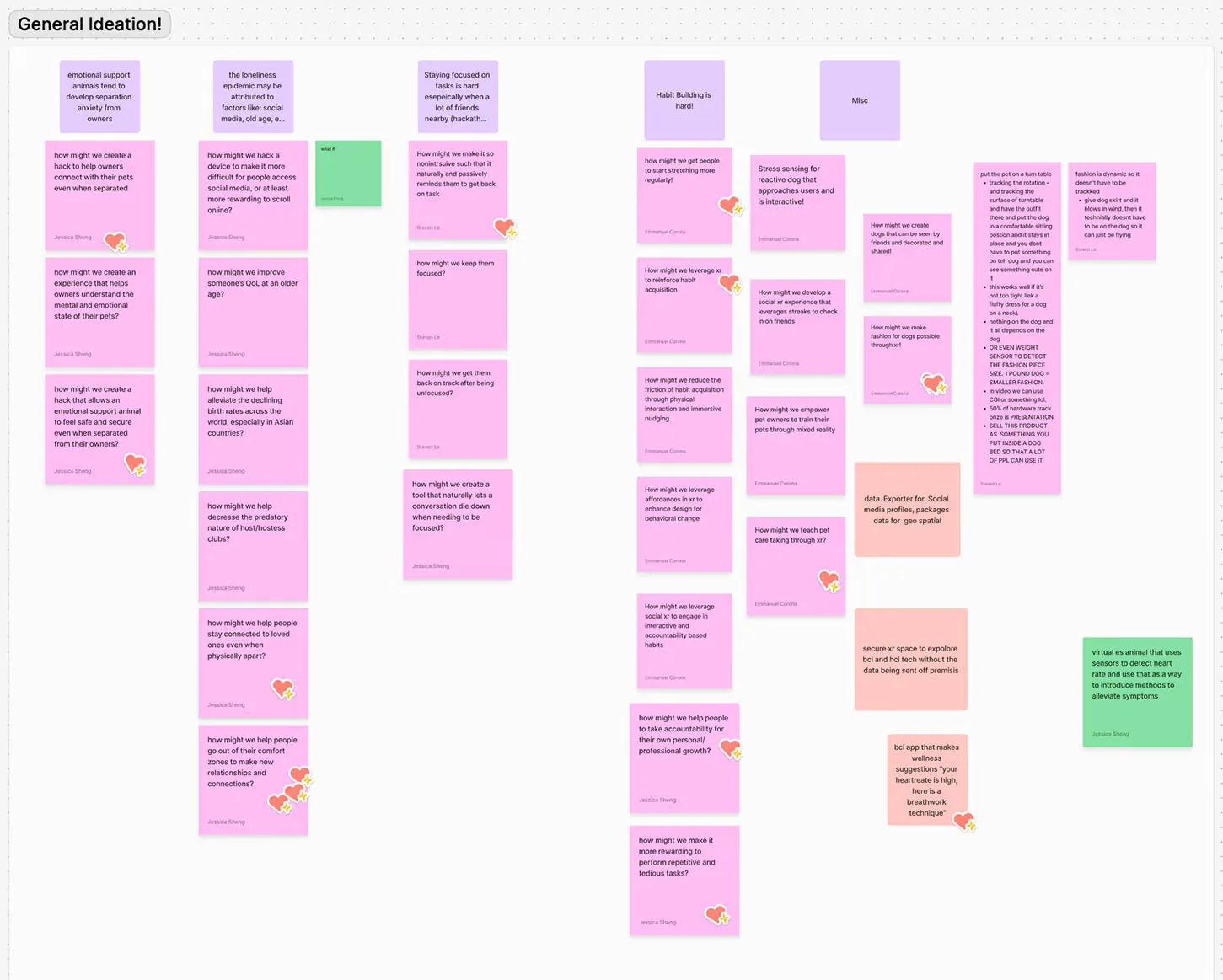
Ideation. We opened wide, a divergent session exploring every way biosensing could enhance emotional wellbeing in XR, then ran a convergent pass to commit. The winning idea had to clear two bars: genuinely useful, and buildable by five people, none of whom had touched hardware before, in under three days.
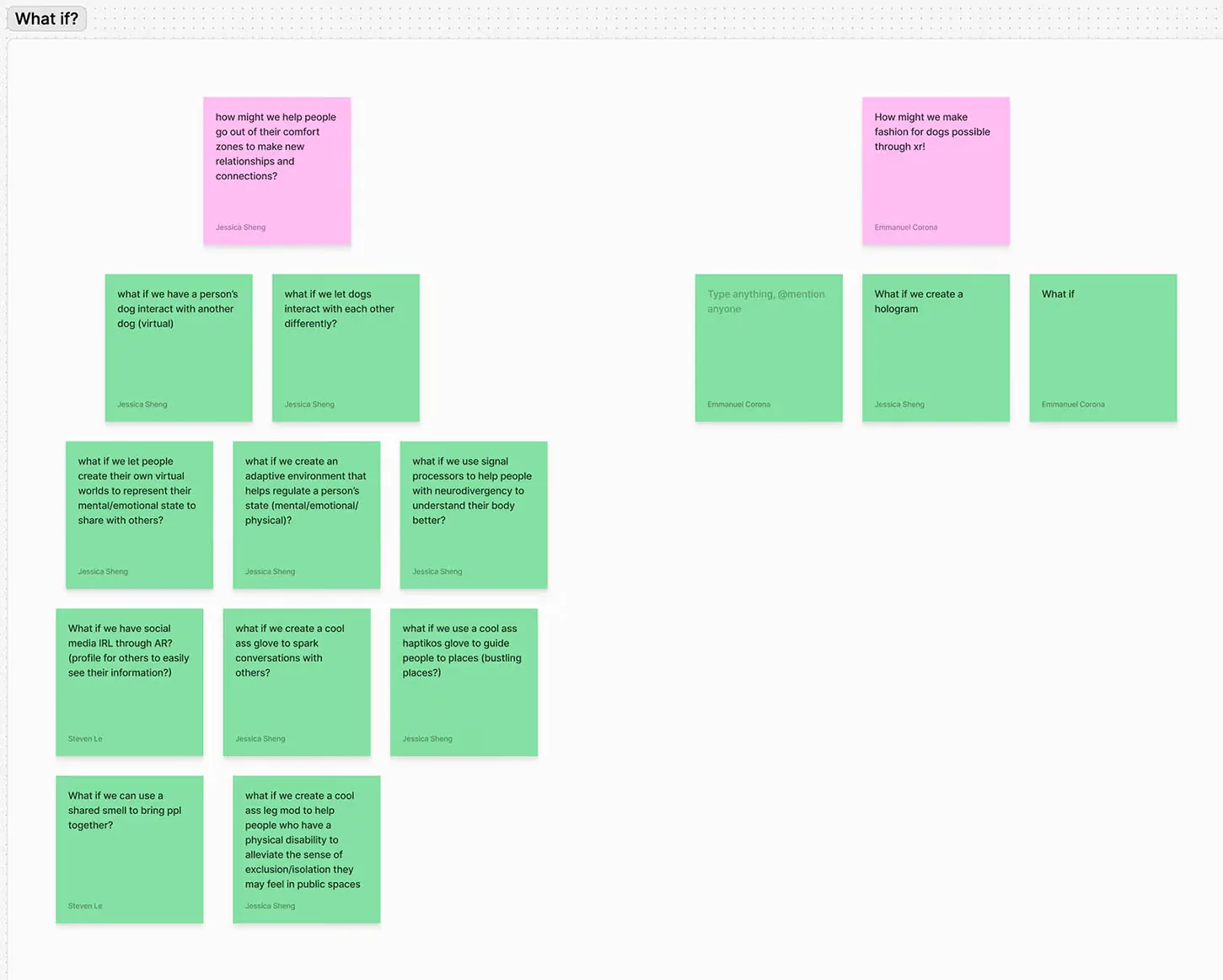
Research foundation. I grounded the concept in three findings. Animals are perceived as non-judgmental, which lowers the barrier to self-soothing. Computer-simulated pets have been shown to promote empathy and healthier behaviors. And among physiological signals, EDA is the most effective real-time anxiety measure, with PPG supplying heart rate and respiration. Those findings set the sensor priorities and the interaction model.
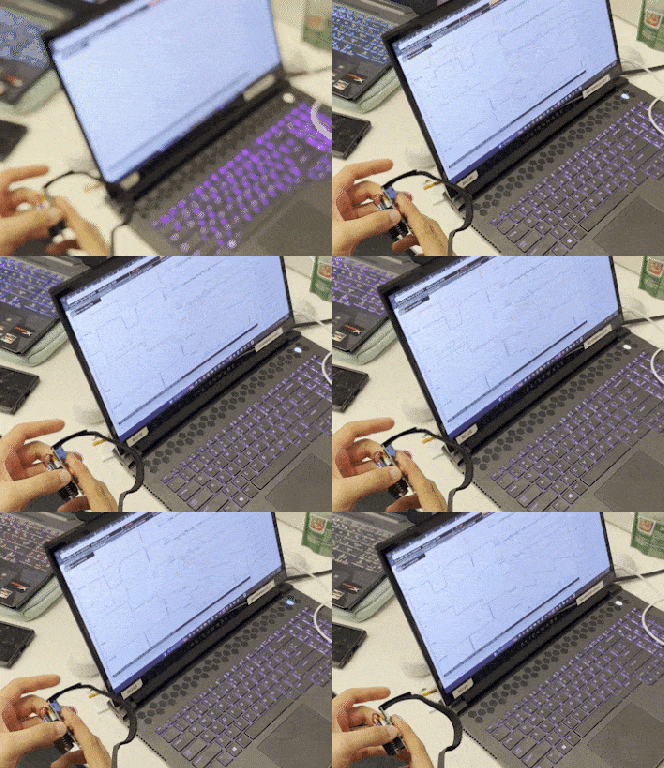
Integration & testing. The hard part was making the EmotiBit talk to Unity reliably enough to drive behavior live. I helped integrate and test that sensor pipeline against the VR experience, and ran user testing on the floor to confirm the pet's responses actually read as responsive, that people felt seen by it.
Top 10 at MIT Reality Hack 2025
I served as Product Manager and Research Lead. I set the product vision, defined scope, and steered strategy under a brutal time limit, and I led the team through the divergent-to-convergent ideation that landed us on Nudge Pet. As research lead, I grounded the concept in the literature on animal-assisted therapy and wearable biosensing, which set our sensor priorities (EDA first) and the non-judgmental-companion interaction model.
On the build, I helped integrate and test the EmotiBit biosensing pipeline against the VR experience, and I ran user testing to validate and refine the loop. The engineering and 3D work was a true team effort.
Built with Jessica Sheng (3D modeler + project manager), Steven Le (XR developer), Ethan Johnson (EmotiBit developer), and Audrey Lane (project manager). Demo video by Cole Lee. Snuffles is my real emotional support animal.
None of us had built with hardware before, and the honest lesson is how much of a hackathon is risk triage. We picked the idea we could actually de-risk in 2.5 days, not the flashiest one. The closed-loop bet, driving a virtual pet off live EDA, was the riskiest piece, so we built that spine first and let everything else hang off a working signal. The softer takeaway: anchoring the project in a real emotional support animal, Snuffles, gave the team a true north for every design call. A wellness concept earns its credibility from honesty, not polish, and having a real referent kept us from designing a gimmick.