Mind Compass
A mixed-reality mindfulness app for children that won the CS147 Grand Prize by grounding every design decision in needfinding research with parents and educators.
Kids can't regulate what they can't understand
Mental health pressures on children are rising, yet most mindfulness tools are designed for adults, delivered through flat phone screens, and require a parent to facilitate every session. That monitoring burden falls heaviest on parents who are already overwhelmed.
Our research question: could an immersive, gamified mixed-reality experience teach children to self-regulate, without a parent in the room?
Gamification meets mixed reality
The insight from needfinding was precise: parents don't want to manage the session, they want to hand off a skill. That reframe shifted the design target from "calming tool" to "independence trainer."
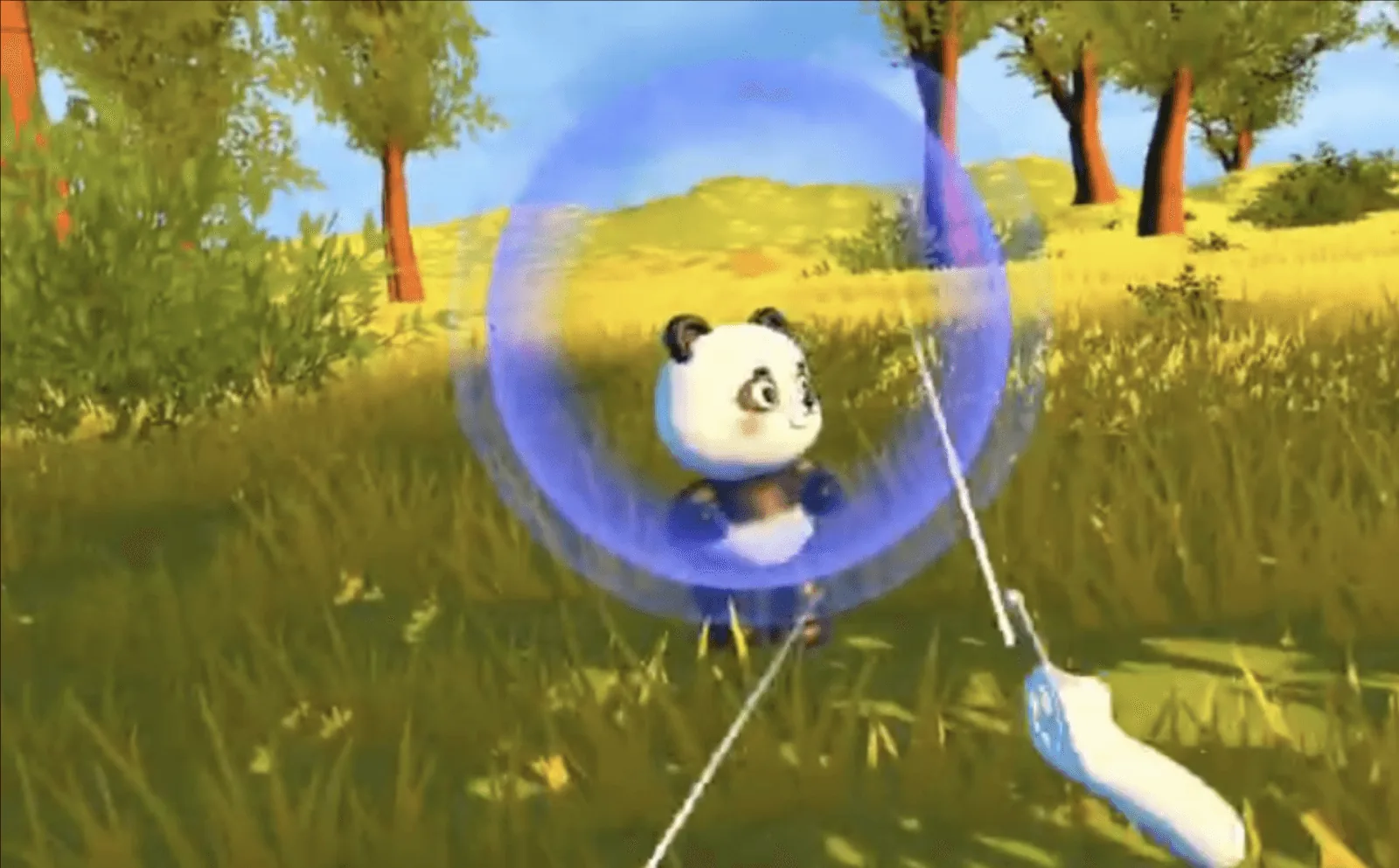
MindCompass uses mixed reality on Meta Quest to place whimsical "Adventure Buddies" in the child's actual physical space, preserving their sense of room and safety while immersing them in guided breathing and narration. Gamified rewards (gems unlocked by completing sessions) borrow from the motivational loops children already trust in games, turning a mindfulness habit into something they return to voluntarily.
The MR choice was deliberate: full VR isolates children from their environment and can heighten anxiety. A phone screen lacks the physiological presence needed to anchor a breathing exercise. Passthrough MR threads the needle.
Research-driven from interview to final prototype
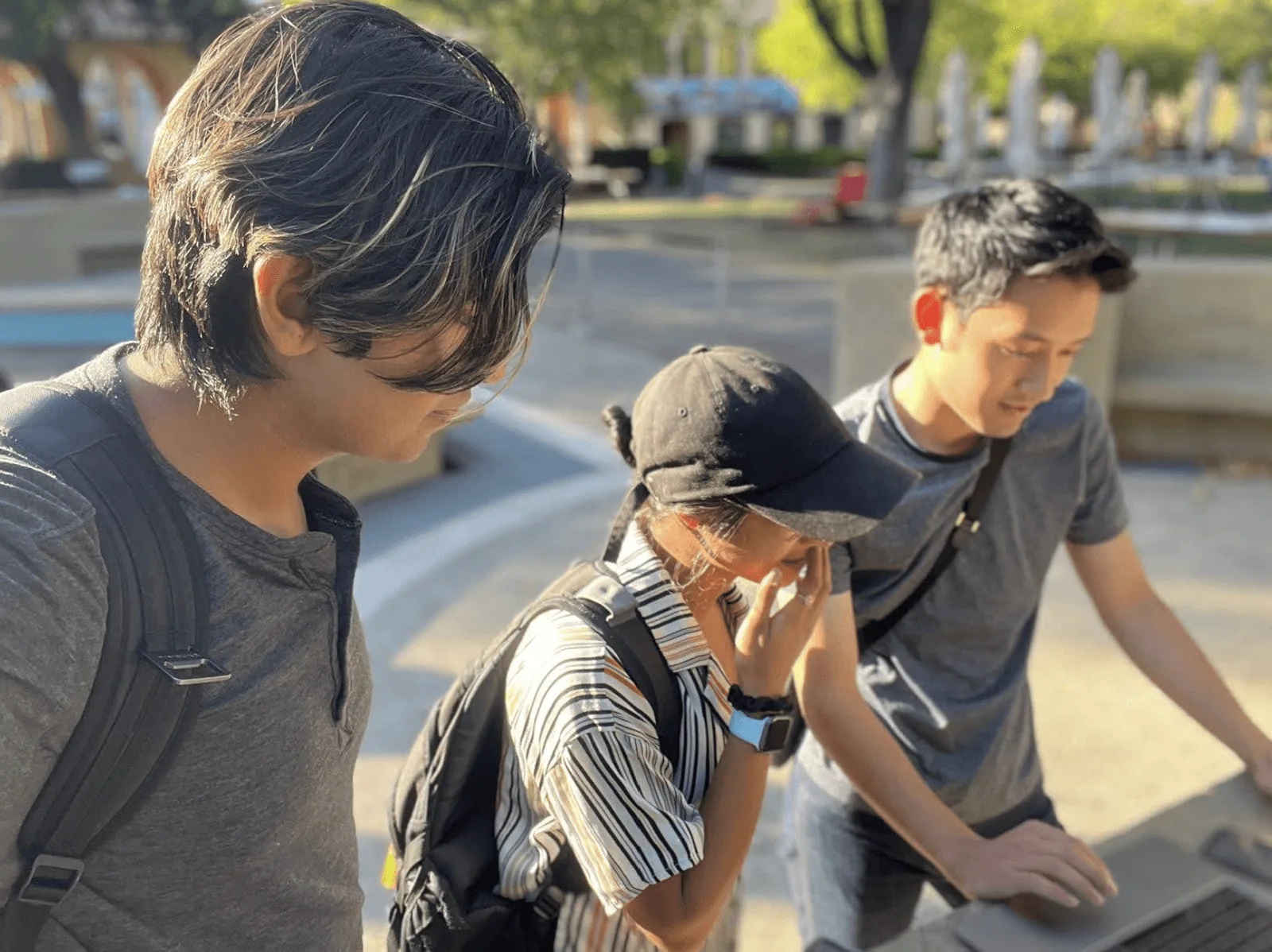
Needfinding interviews with six parents and educators (including a 25-year veteran elementary school teacher) surfaced three consistent themes that became non-negotiable design requirements: parents feel anxious about providing "perfect" care, they want children to develop independence in managing emotions, and gamification is already proven as a motivator for healthy child behavior.
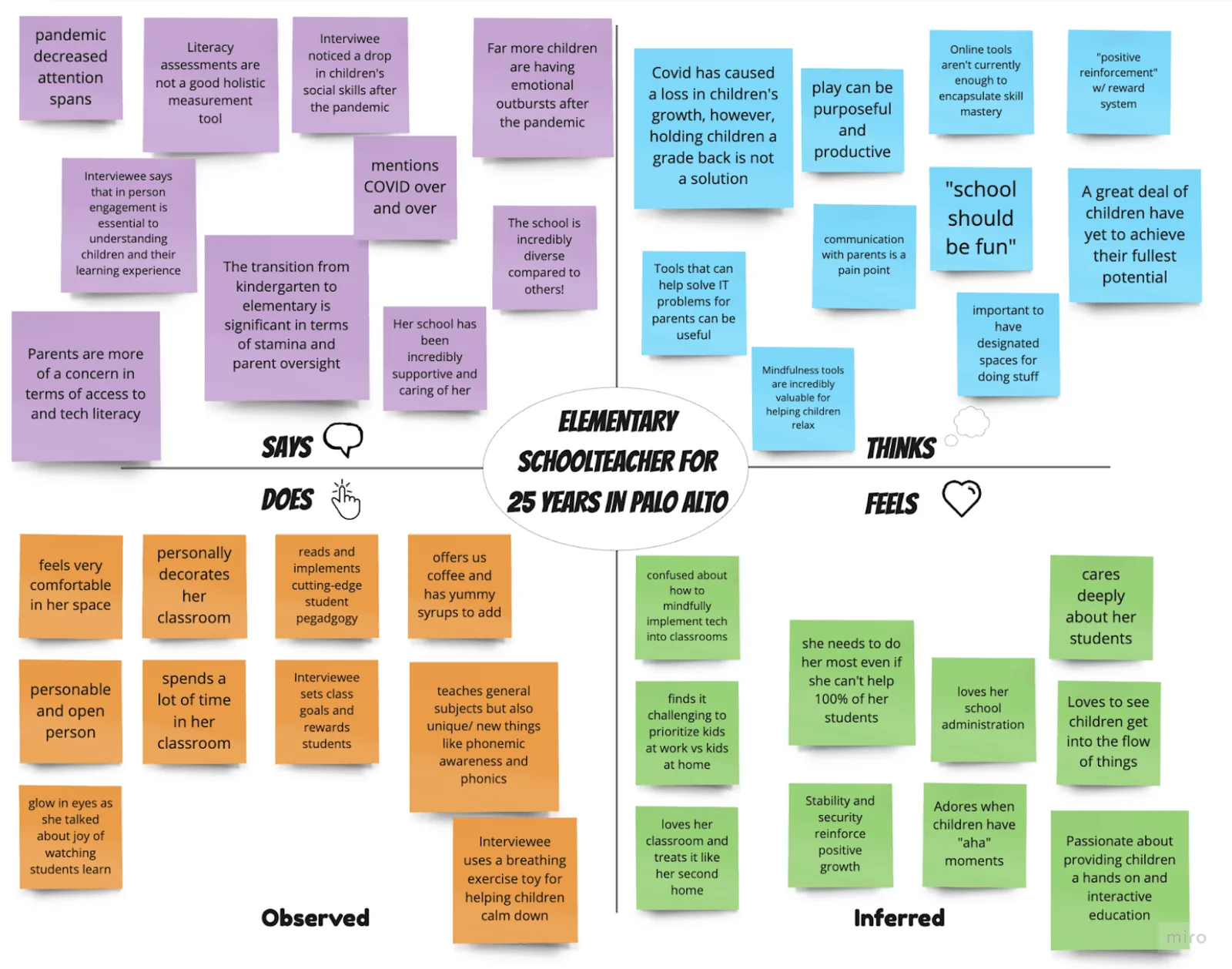
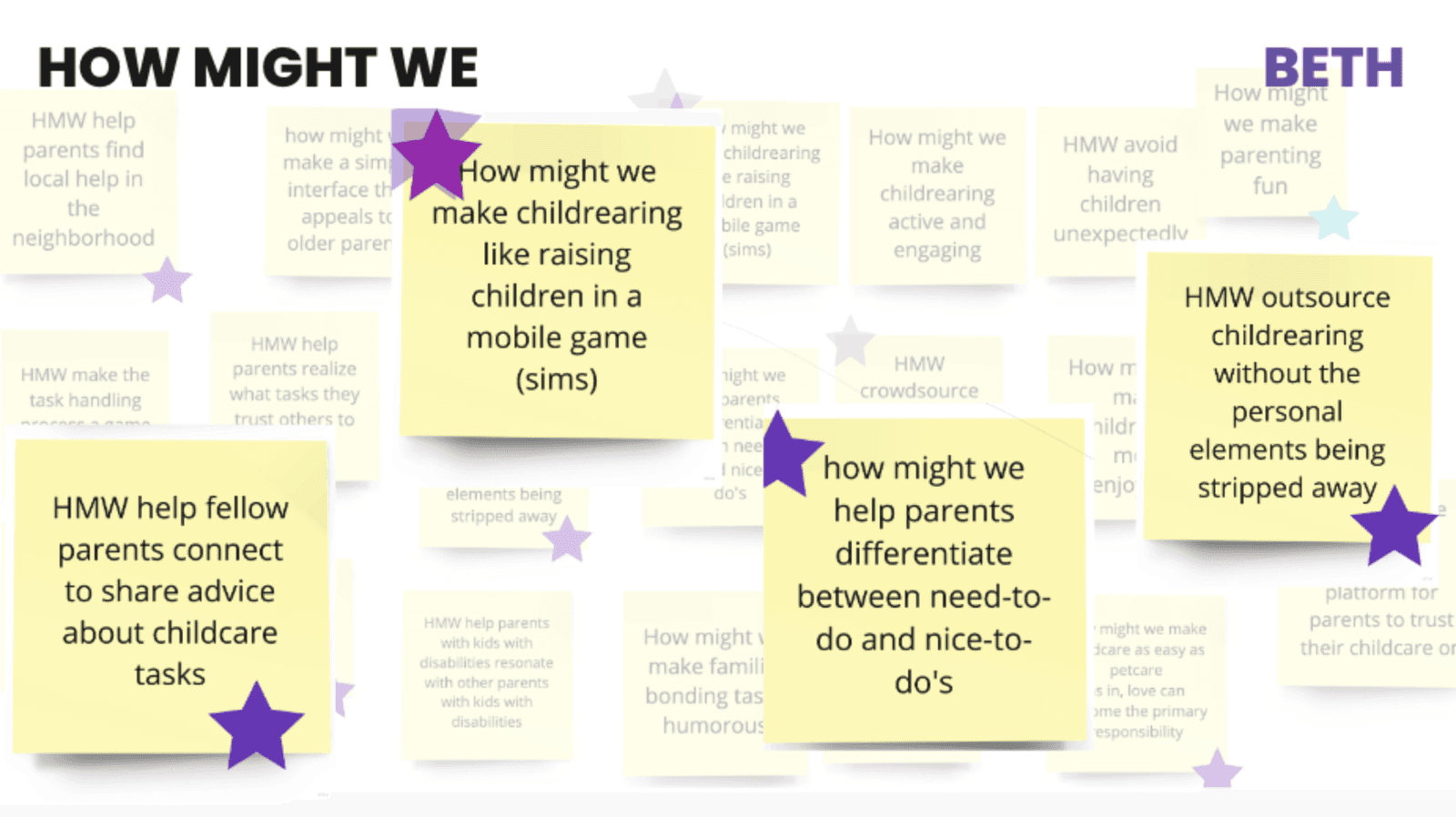
POV & HMW. Synthesized observations became Point-of-View statements, then an HMW voting session collapsed 20+ candidate directions to one.
- 6needfinding interviews
- 3non-negotiable themes
- 20+HMW directions
- 1design direction
View data
| Stage | Count |
|---|---|
| 1. needfinding interviews | 6 |
| 2. non-negotiable themes | 3 |
| 3. HMW directions | 20+ |
| 4. design direction | 1 |
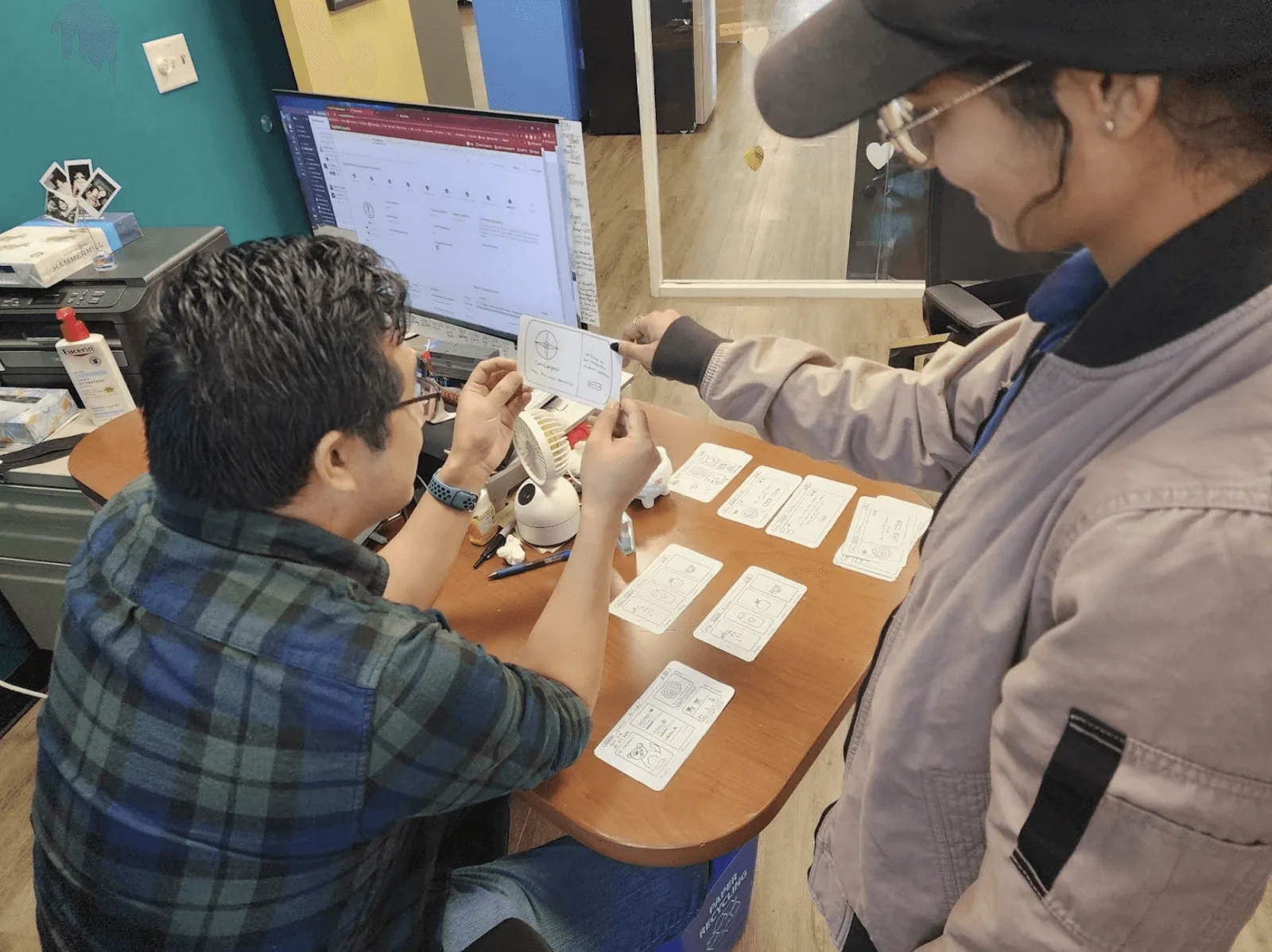
Lo-fi prototyping. Paper prototypes let the team test assumptions cheaply. Caitlin ran lo-fi interview sessions that were critical in narrowing the target age range (landing on 7+) and confirming that meditation, not general mood-tracking, was the right behavioral focus.
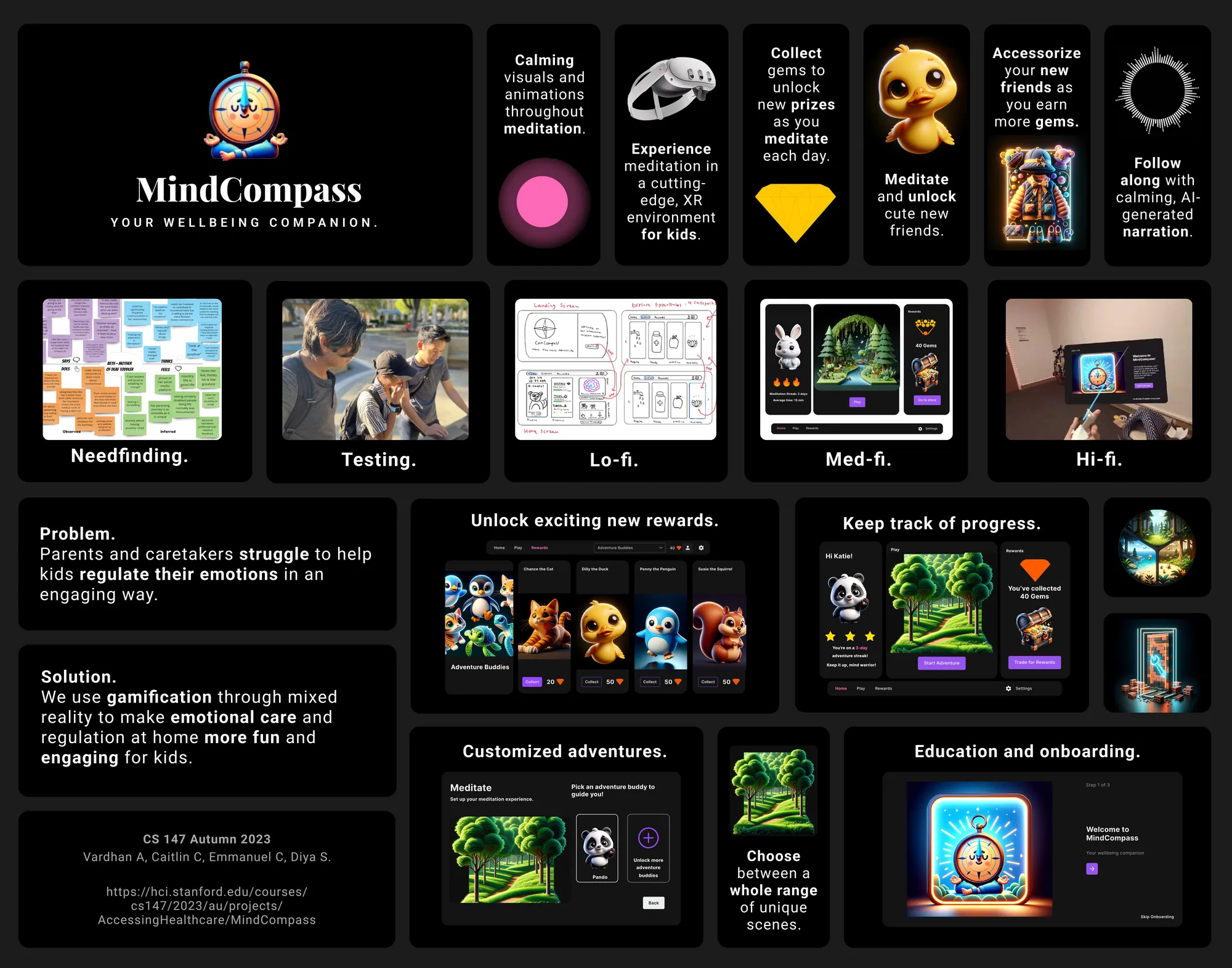
Med-fi → Hi-fi. Figma prototypes iterated the "Captain Compass" onboarding flow, personalization screens, and breathing animation UI before any Unity work began. Interface designs were then integrated directly into Unity.
- 2Personalizeduration, audio, Adventure Buddy, Magical Land
Step details
| Step | Detail |
|---|---|
| 1. Captain Compass onboarding | A narrated mascot introduces meditation using kid-friendly terminology, explaining the what, how, and why before the first session begins. |
| 2. Personalize | Children choose session duration (5 to 15 minutes), audio preferences, an Adventure Buddy character, and a Magical Land environment before each adventure. |
| 3. Breathing session | Guided audio narration, synchronized pulsing breathing cues, and immersive 3D environments, delivered in MR so the child's room stays visible. |
| 4. Gems and unlocks | Completing sessions earns gems to unlock new Adventure Buddies and environments, creating a habit loop children return to voluntarily. Unlocked content is chosen at Personalize, so the reward feeds the next session's setup. |
Heuristic evaluation. A structured heuristic evaluation (CS147 A9) surfaced usability issues before the final prototype was locked, ensuring the hi-fi addressed discoverability and consistency problems identified by external evaluators.
Grand Prize, and what the judges saw
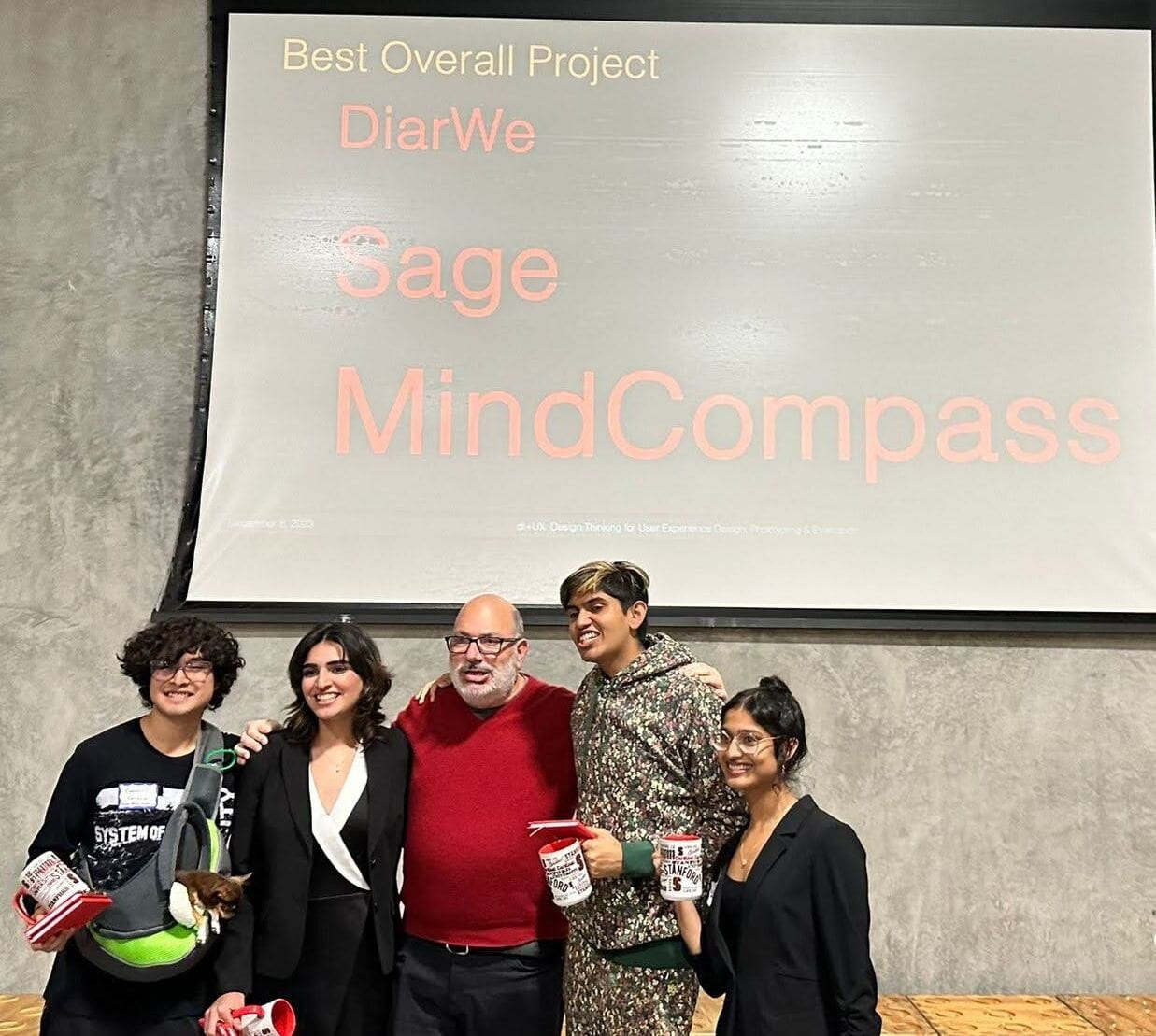
The project was recognized by Prof. James Landay and the CS147 teaching team as the strongest combination of research rigor and technical execution in the cohort.
I led the Unity implementation: building the 3D MR environment, integrating Figma UI designs into Unity to match the team's interaction flows, and implementing the OpenXR passthrough toggle between MR and VR modes. The technical stack was Unity with OpenXR Plugin and C# (Rider), targeting Meta Quest.
I also participated fully in the design thinking process: needfinding interviews, empathy mapping, and experience prototyping. The research phase was collaborative. Insights were surfaced as a team, not handed off.
Built with Caitlin Kunchur (Project Manager + UI/UX Designer), Vardhan Agrawal (Engineering Manager + Web Dev/Design), and Diya Sabharwal (UX + Game Designer). Advised by Prof. James Landay and TA Amelia.
The POV/HMW phase felt slow when we were in it. Narrowing 20+ directions to one feels like loss. In retrospect it was the most valuable session of the project. Every subsequent design argument we had traced back to that vote: "does this serve the independence requirement?" Having the research anchor made those arguments short. The other lesson: MR as a design choice only earns its complexity if VR and phone can't do the same job. We had to argue that case from the needfinding data, not from novelty, and the data actually supported it.